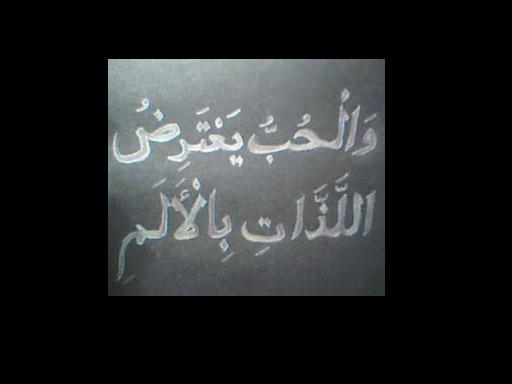
Why is it that man’s largest purpose in life it seems, is to have experienced love, even if it was entailed with loss?
The word’s of Khalil Gibran come to mind as he writes; “love is sufficient unto love”. Perhaps love is in the driver’s seat and we are merely passengers designated to ride in the back alone or perhaps in company? Regardless, it keeps on driving.
So much has been written about love, so many poems, songs and volumes all trying to capture its essence, purpose and mystery. Shakespeare wrote in his S
onnet 116; “It is not love that alters when it alteration finds, nor bends with the remover to remove”.
I ask myself; then what have we all been doing so far? I see love bending everyday. I witness love changing with circumstance, even disappearing. Such love that is idealized by Shakespeare seems fit only for the world of sonnets. He finishes by saying; “If this be error and upon me proved, I never writ nor no man ever loved”.
No doubt, "Romeo and Juliet" has been, is and always will be the ultimate epitome of a classical love story. The Arabs have “Qays wa Leila”, the Indian Subcontinent have “Leila Majnu”. It can only be fair to say such stories must have affected the way societies view love and perhaps idealized it into some sort of higher state of being that extends and lives way beyond our sense of time and space. Suddenly the idea of a hereafter is given a greater purpose; one to reunite loved ones.
In our world of “common sense” where love is nothing but “chemical reactions”, the flare and magnitude of such epic depictions such as the likes of "Romeo and Juliet" have become reduced to nothing more than a work of art preserved for posterity due to its historical importance rather than perhaps its inspirational. Whereas in other places like India, the story lives on everyday through the mass-producing Bollywood movie industry where forbidden love and dramatic circumstances where love lives beyond the realms of time all are common place.
One might wonder if the rationalized west is less romantic than the east. Or perhaps societies with a great belief in the hereafter or reincarnation depict love in many more dimensions than one? Dimensions that seem like hogwash to someone who doesn't believe in anything but the empirical and scientific.
Julia Roberts may have gotten the object of her affection in “Pretty Woman”, but nearly a decade later she was left without as she watched the love of her life marry someone else in “My best friend’s wedding”. What brought on this sudden twist of fate in the modern day Hollywood love genre? We always used to love watching our onscreen love heroes and heroines reunite. Or perhaps not.
Maybe the complexity of love doomed to fail strikes a cord of realism and ability to relate in our hearts, just like it always did. Maybe there’s a reason why “Casablanca” still remains among the top ten voted love stories of the past century, and people still sing “Love Hurts”.
It can be said, that no matter what opinion we should hold about what love is, an opinion we hold, nevertheless...