Showing posts with label Bosnia. Show all posts

May 21, 2007

War & The need to be tidy

On my trip to Bosnia last summer, I came to terms with war in the heart of Modern Europe. I stayed with my friend and her family in Hadjic outside Sarajevo on an estate situated on top of a hill overlooking green valleys and Sarajevo.

I noticed how tidy her father was, and everything had to be in a certain place. He noticed that I was looking at him in wonder and he went on explaining why he had become so tidy:

"During the 4 year siege on Sarajevo by Serb forces, we seldom had electricity so one learns to organize ones life in a way that should one even be blind, one can find things. The comb, nail cutter, glasses, everything has to be at a decided place and never move an inch from it."

December 15, 2006

"I am an immigrant, I am a Muslim"


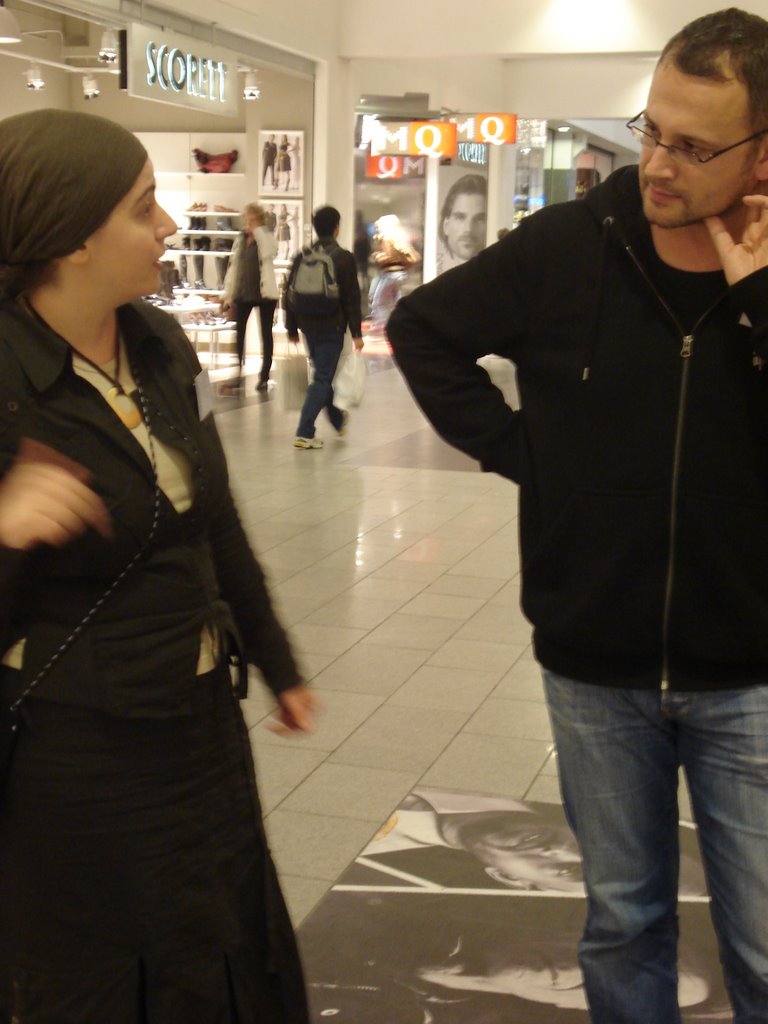
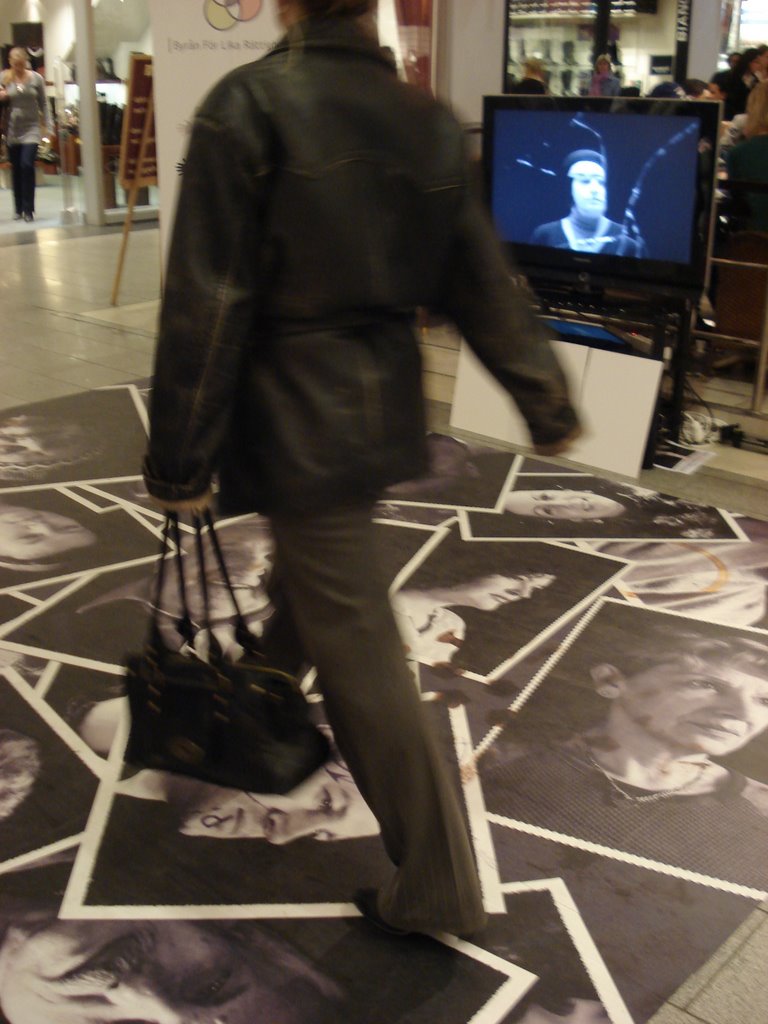
Earlier this month, two Bosnian artists Lejla Porovic and Alija Isanovic held an exhibition called "I am an immigrant, I am a Muslim" in Kista Shopping Mall, Stockholm. It was sponsored by the one and only anti-discrimination bureau in Sweden that has been established by Swedish Muslims.


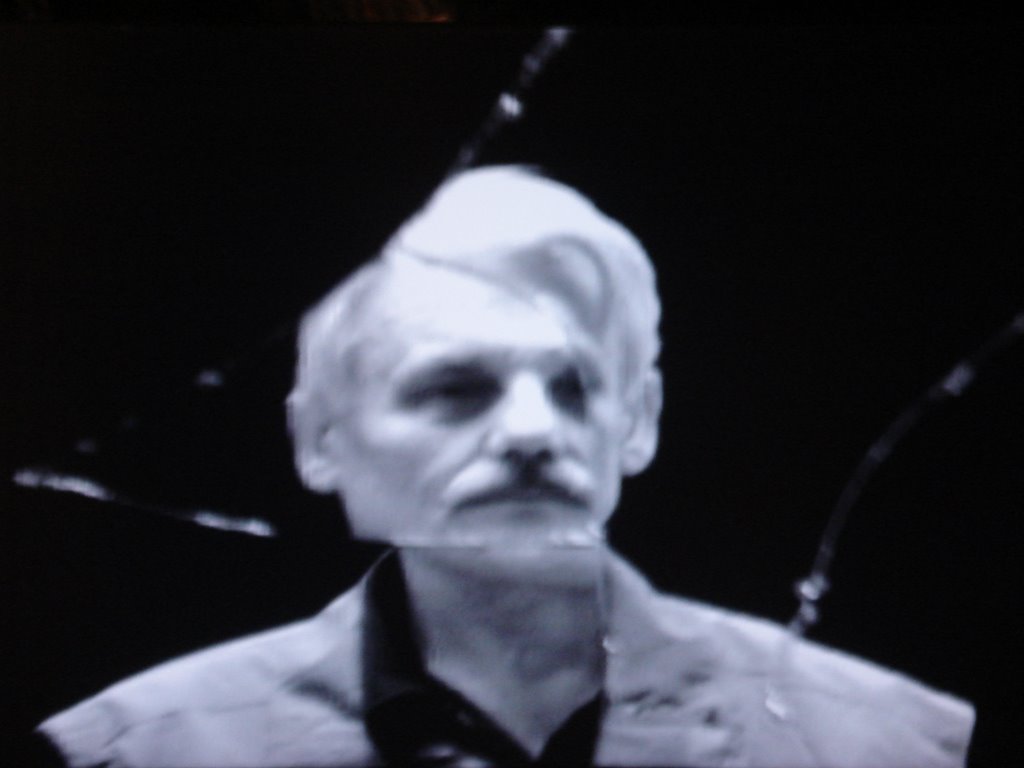
Old man looking into a broken mirror in the video

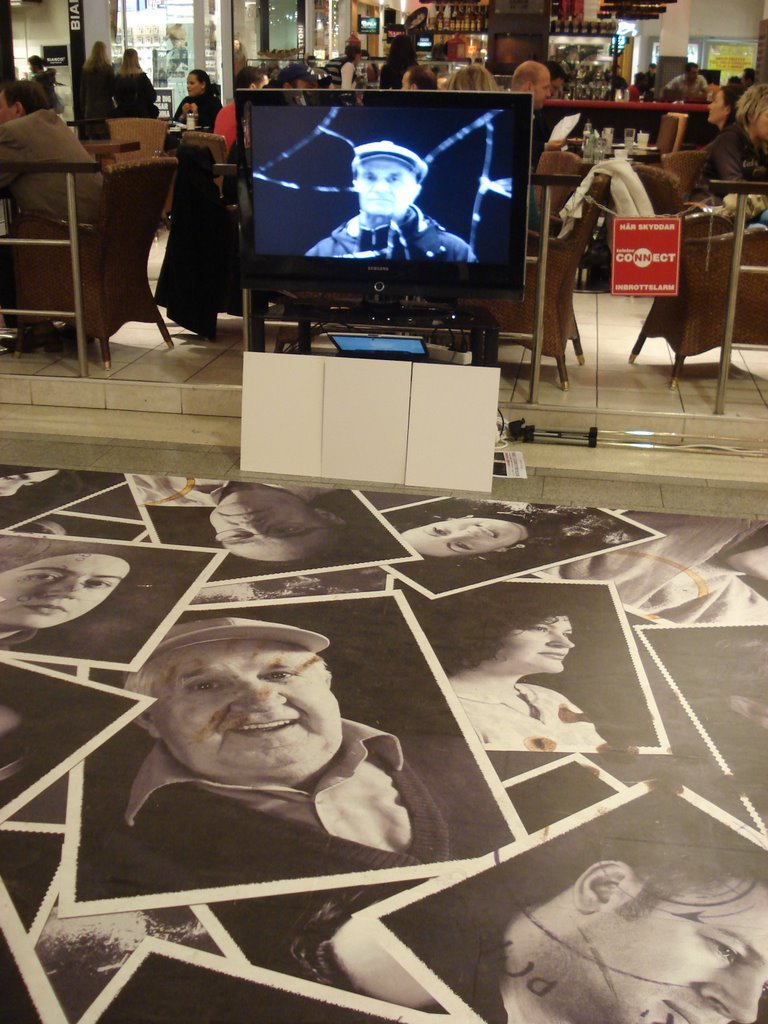
In the middle of the shopping mall, you noticed a tv had been set up playing a film in black and white of different immigrant Muslims walking up to a broken mirror watching their distorted faces. Under the tv a thin film had been glued to the ground covered in black and white photographs of the very same immigrant Muslims.


To the right: Lejla and Alija discussing their work

I asked Lejla what the pictures on the ground signify;

-The feeling of being a newly arrived immigrant in a country is a bit like starting at the bottom, being stepped on, not noticed. And the video complements that feeling by showing how one looks in the mirror and not quite recognizing oneself anymore. The photos in black and white represent a feeling of nostalgia for our past. There are even coffee stains on them to give them that used feel.


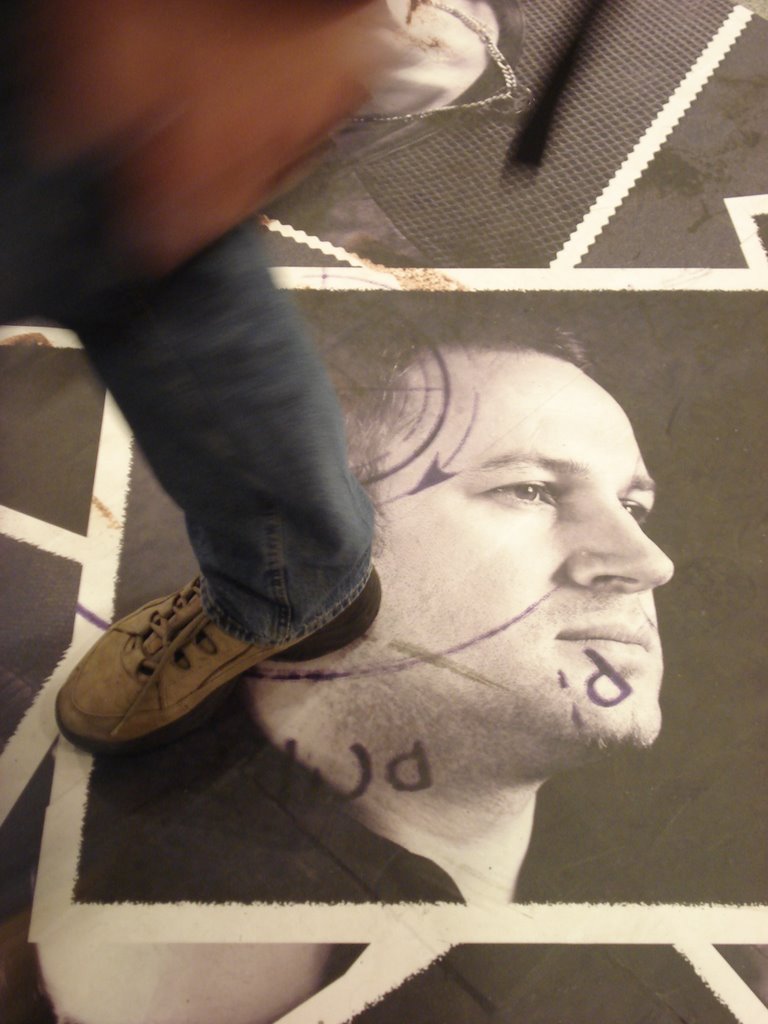
First Pic: A visitor avoiding stepping on Alijah Isanovic
Second Pic: A visitor walking all over the whole foto display

The most interesting part was watching how the Mall visitor's reacted to the pictures on the ground. I found there were three types of people; the one that as he/she noticed the pictures, made every effort not to walk on the faces. The second type that would walk around the pictures. The third type that wasn't bothered at all and walked right over everyone.

November 29, 2006

What's in a name? part 2

This is a story from real life, one that will mark you. For those who missed part 1, read it here.
Goodbye mother
Hassan, his wife and two boys were settled in Sarajevo now where he lived an average life of comfort and happiness with his extended family.

Hassan's mother however slowly became unwell and was diagnosed with cancer. A woman in her 50's, she was then cared for by his sister Emina. Things went downwards from there on. His majka (mother in Bosnian) passed away and the family of 7 were devastated.

Unrest in Bosnia
Milosevic comes to power in neighbouring Serbia in the early 90's and the world for Hassan and his family is about to change in more ways than anyone could have ever fathomed. A wave of unrest is spread through the Balkans, some decide to leave, but most of the others like Hassan stayed on beliving that it would probably get better.

The war, one that would last for years, breaks out in Sarajevo by Serb hands and in a short period of time the whole of Bosnia becomes the scene of autrocity, massmurder and genocide.

Finding salvation
Everyone is trying to leave. There are buses taking the men away. Most of the men are murdered. Others manage to flee to neighbouring countries or refugee camps. Hassan's sister Emina escapes with her daughter but her husband is placed in a concentration camp.

Hassan, intelligent and skilled as he was in his profession, was much too valuable for the Serbs to kill. They held Sarajevo under siege for 4 long years, the longest time for a siege in European history. Hassan knew the electrical wiring and system of all of Sarajevo and thus was held hostage together with his family.

His house was occupied by soldiers who made sure his family didn't escape along with everyone else, and everyday like clockwork, they would come early in the morning and pick him up for duty at the electrical power plant in Sarajevo, and after slaving away the whole day walk him back to his two boys and beloved wife.

Refugee in Sweden
Hassan's sister Emina made it to Sweden with her 4 year old girl, and eventually she managed with the help of the Red Cross and other humanitarian organisations, find her husband and get him to Sweden too. Hassan's other sisters and brothers fled to Germany, but his father, was not as lucky. The Serbs killed him along with most of the men in his family.

Hassan however, was still alive and his sister knew it.

Leaving Sarajevo
The only way for a Bosnian stuck in his own city under siege, to leave the city, was through military escort and/or human rights organisations with letters from other European Governments, picking the people up. Even Serb soldiers would not be able to go against that and would have to let go whomever they held hostage.

Emina, herself traumatized by the news of the death of her and Hassan's father, did whatever she could to try and get Hassan and his family to Sweden. She wrote letters, and she was visited in the refugee camp in Sweden by humanitarian and Swedish government workers who helped her with a letter that would serve as a salvation for Hassan and his family. In it she had to state the exact names of his wife, son and Elvir, his stepson.

Coming for Hassan
An envoy came to pick up Hassan and his family and the letter with all names was presented to the Serbs, with all the names of written on it, but it was rejected twice because Emina had written Elvir's name (Hassan's stepson), with Hassan's surname instead of his mothers surname as is written in his passport.

In all her trauma, Emina forgot that Elvir had mainatined his mother's surname and not his stepfather Hassan's and when she was informed of the letter being rejected she quickly tried to rectify it and got a new letter made. Another envoy was sent.

Hassan dissapears
One day Hassan didn't come back home after his long forced labour at the electrical power plant. The envoy came to get the family, this time with a complete and full letter with all the correct names in it, but of course Hassan was missing. He was to be missed for 30 days, when one morning Hassan's wife gets a call from the Serbs who had taken him and is informed that he is now dead and they wanted to know if she wanted his body, otherwise they would dispose of it.

His murdered body was later thrown by the gate of his home and word was now sent to Emina in Sweden. It was too late. Hassan was no longer. He knew too much, it was too risky to let him go.

Hassan's wife and two children escaped heartbroken with the envoy and were taken to Sweden.

As for Emina, she is tormented everyday having lost her father and most of his family and her beloved brother. She sometimes asks herself, "What if I hadn't written Elvir's name wrong? Maybe Hassan would still be alive."

What's in a name...

Note: Real names used in the story have been altered.

November 25, 2006

Deadly Beauty

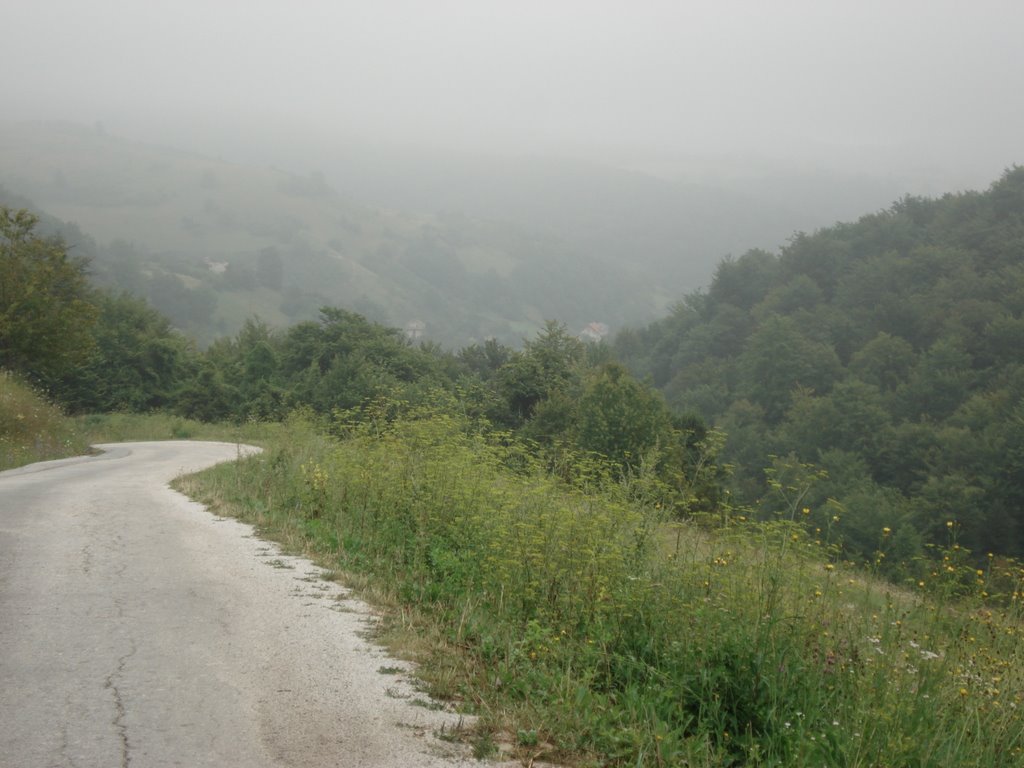
What do you all see? Green, lush beauty?
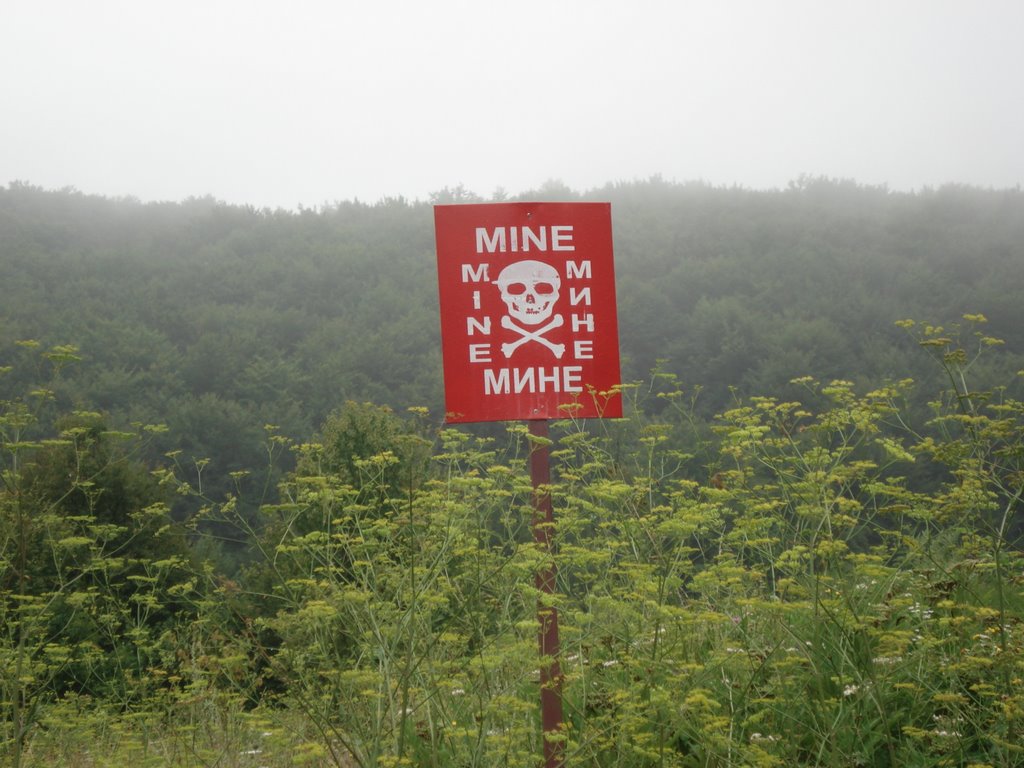
Think again. It is all covered in mines by the Serbs during the war in Bosnia.
This is the only road to the top of this beautiful mountain outside Sarajevo and it is not covered in mines. Anything beyond this road is mine infested. On my trip to Bosnia last summer I spent a week on this mountain gazing at untouchable beauty.

And yesterday Bosnian and British mine disposal experts got their feet blown off in Lebanon, by Israeli mines from the recent conflict.

In 1997, an agreement was signed by 151 States not to use or store landmines. However 40 countries, among them Israel, America and China, did not sign it.

"U.N. experts say up to 1 million cluster bombs dropped by Israeli aircraft during the July-August war against Hezbollah remain unexploded in south Lebanon, where they continue to threaten civilians. At least 24 people have died in cluster bomb explosions since the war ended."

-International Herald Tribune
-Svt (Swedish Television)

October 05, 2006

What's in a name? Part 1

He never made it to tell you all this, so I will tell you his story as related to me by his sister. Reality beats fiction, and this following story from real life will leave any people in doubt of that statement, as sure about it as the sun rising and setting everyday.

Libya, some two-three decades ago:

Hassan, not Libyan himself, was working there electroengineer as he was. He loved a girl. A typical story of impossible love? Not really.

She was seeing his best friend, and eventually became pregnant, out of wedlock. Even in Communist Bosnia (or Yugoslavia as it was at that time), it was somehow frowned upon. Hassan's best friend, left her without marrying her or taking care of the baby boy that would eventually see the light of day; Elvir.

It didn't matter to Hassan, and he decided to marry her anyway. His parents back home were not thrilled but they all agreed that should he decide to marry her he should under no circumstances separate mother and child. He wouldn't have done that anyway. He loved her too much.

He left Libya and started a new life in Bosnia with his wife and bonus child.

The child had been damaged a lot, especially during the pregnancy when his mother had tried to hide the fact that she was pregnant. Elvir couldn't speak properly and Hassan invested a lot of time and money in his stepson to get him speech therapists and whatever else to help him function as normally as possible.

Eventually they had a boy of their own. The only difference between the two boys was that Elvir kept his mother's last name, and the new boy of course got the name of his father. That is how she wanted it.

Who would have thought then, that it would have such dire consequences?

As time went by the children grew older and Hassan made sure never to favor his biological son over Elvir, sometimes resulting in being harsher on his own son. Anything so that his wife would not feel that her boy was not loved.

To be continued...

August 08, 2006

Morica Han


Walking through the old town Bascarsiye in Sarajevo, really is like walking back in time. We decided to have coffee at an old former Caravansaray (meaning castle of caravans), which you can find on Ferhadija walkway.

The han was used as an inn, warehouse space, stable and accomodation for traders who often travelled from both near and far. It was funded by the Gazi Husrevbegova (a name you will often hear and read about in Sarajevo) fund, but got its name much later from the inn operator Mustafa Moric.

Today it hosts many cafés and restaurants and some absolutely amazing local Bosnian and Persian rugs.

August 07, 2006

Then and Now

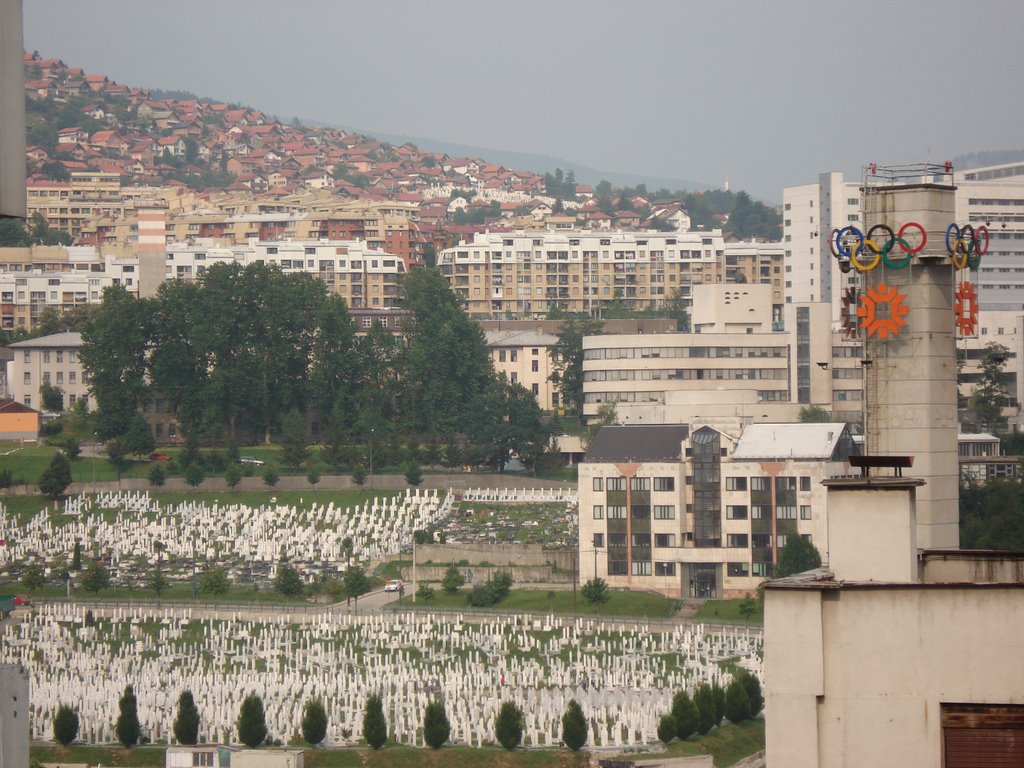
In 1984, Sarajevo hosted the Winter Olympics, what was to be the biggest ever, at the time. It was successfully carried out and a lot of sarajevo had been primped up for the event, the first and only Holiday Inn was built, and still stands today.

Less than a decade later, Sarajevo (and Bosnia Herzegovina as a whole) was under seige for four years, attacked by snipers, bombs and Serbian militia.

The picture that has moved me the most, and the scene that has moved me the most during my stay in Bosnia is the following one:

August 06, 2006

Mostar Jump

The annual competition held in Mostar coincided with my visit luckily, and I got to witness the men of all ages taking a plunge into the Neretva river from the newly re-constructed Mostar Bridge.

At this event everyone who jumps is judged by a handfull of former jumpers and every year a winner is crowned.

August 04, 2006

Sarajevo in Pictures

"I know that you (Alijah Izetbegovic) believe in God, I'm not sure if God exists but I am absolutely certain Satan does."
-Said by a fellow prisoner of former President of Bosnia Alija Izetbegovic (himself a devout Muslim)
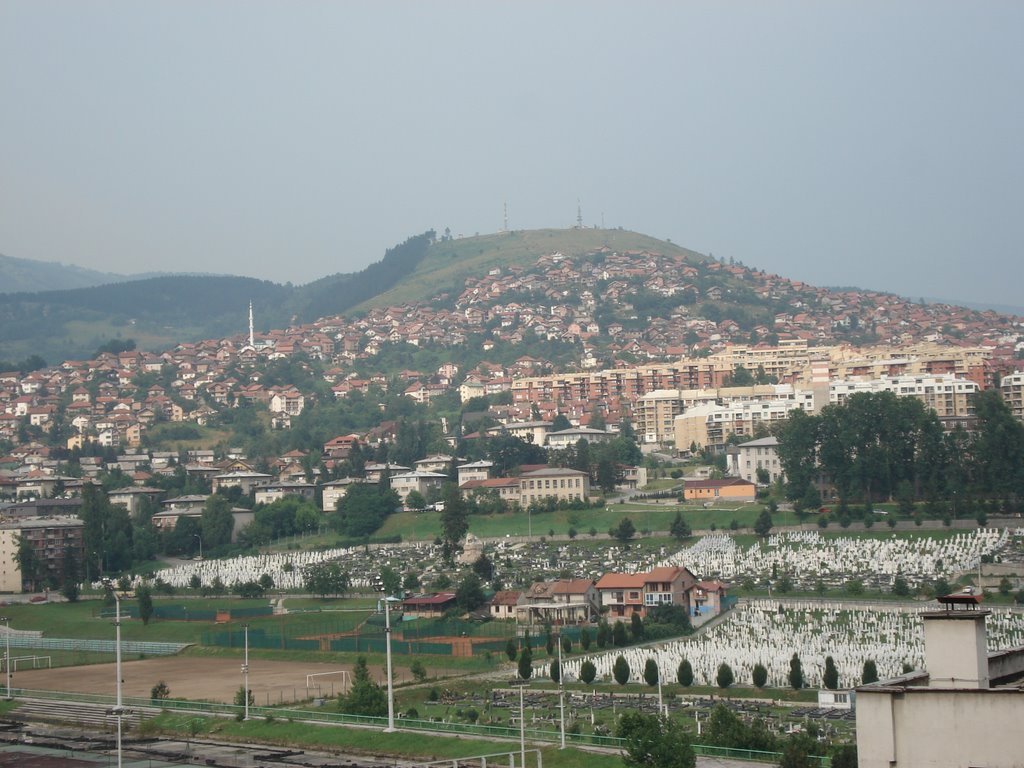
The white in the picture are tombstones of some of many Bosnian Muslims killed in the Serbian Genocide. These are three football fields converted into cemetaries in the heart of Sarajevo.

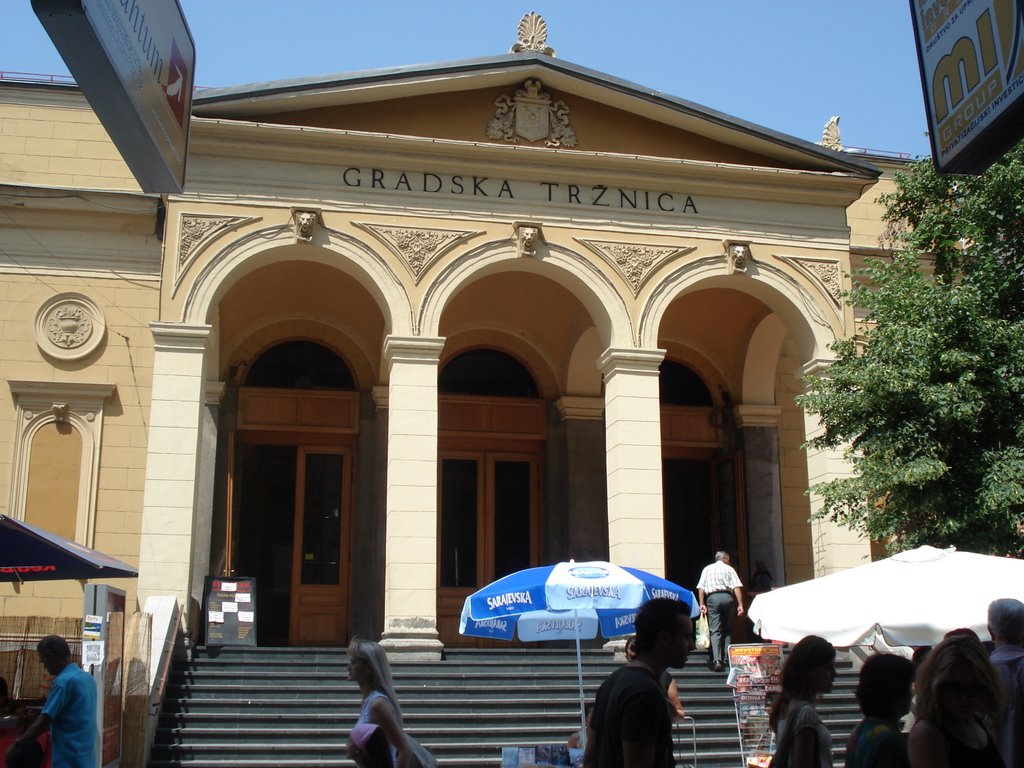
Market Hall

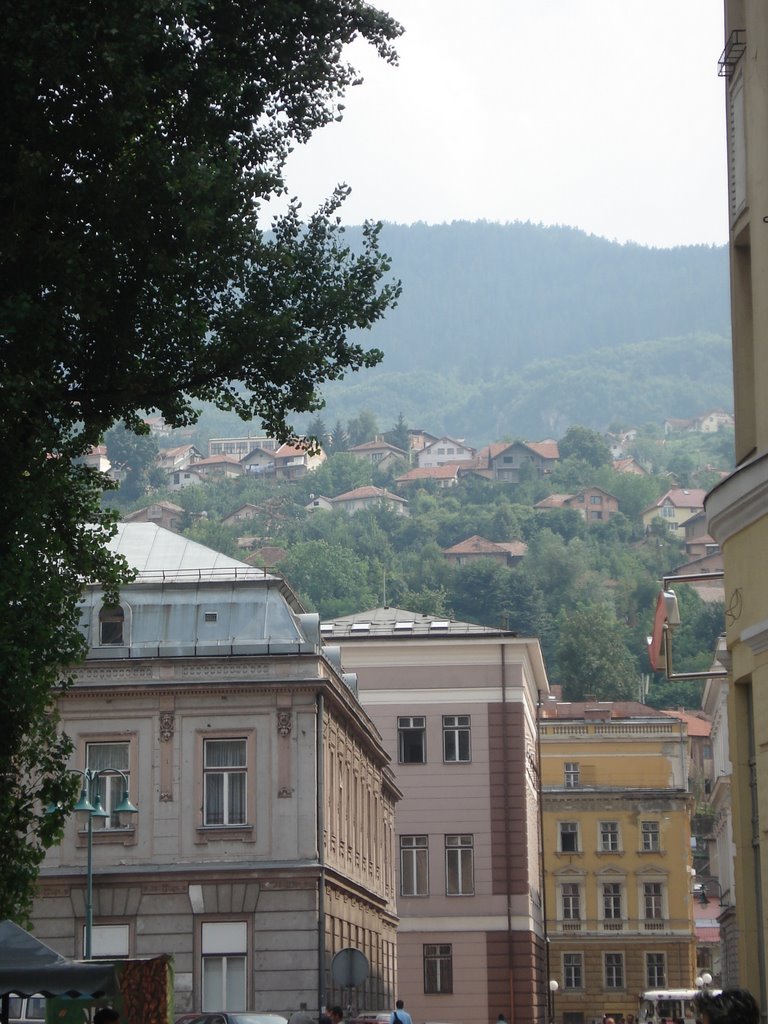
Downtown Sarajevo surrounded by lush, green hills.

Kaizer Bakery


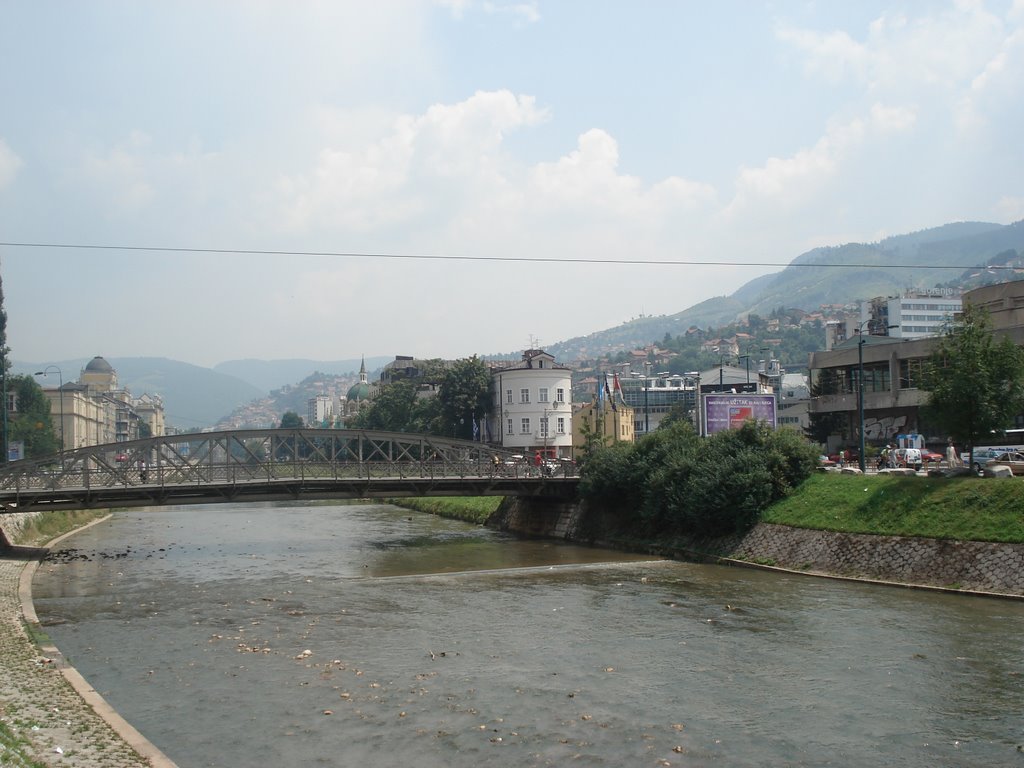
Skenderije, Sarajevo

A bombed apartment building in Sarajevo. I find a lot of beauty in this picture, for though it seems maimed from destruction, it still stands firmly with traces left of its former beauty.

I have not had time to sit down and write properly about my trip yet and I am going away again tomorrow. These are just a few pictures I wanted to share. I will return with more pictures and stories about the amazing Mosques in Sarajevo, the food, the people, the old city, Mostar and the bridge, Visoko and the Pyramids and much more. Meanwhile, enjoy the song Ederlezi by Goran Bregovic that I uploadedon my stickam.
Take care everyone and Allahimanet (Bosnian Muslim greeting for goodbye)
-Shaykhspeara

August 02, 2006

Bosnia

Oh hills of Sarajevo
if only you could speak
What grimness you have witnessed
from your highest peak

Oh bridge over Mostar
they drowned you in the river
of Neretva where you witnessed
crimes that sent cold shivers

Oh Pyramids of Visoko
tell us of the things you saw
Opression spread across your land
four years in the enemies claw.

Oh people of Prijedor
no one knows how many of you fell
But if you would have made it
what horrible tales you'd live to tell?

Oh woman from Trebinje
refugee in your own land
Expelled from home by a foreign people
with weapons in their hand.

Oh green, lush fields of Hadjic
still covered in mines
How many lives were you forced to take?
And how many times.

I am returning from Bosnia tomorrow God willing, and leave you with this poem dedicated to the suffering people, animals, trees, rivers, hills, mountains, mosques, churches, graveyards, homes, hospitals, schools, roads, electrical power plants, telephone lines, water, food of Bosnia, that were all bombed ruthlessly in the war and longest siege in european history of a country.

July 24, 2006

Shaykhspeara in Bosnia

Dear bloggers, I'm off to Bosnia for the first time in my life. A bit of discovering to do there. I still cannot understand how concentration camps could exist in Europe only roughly a decade ago. How my colleague's grandmother was set on fire by Serbs, how my other colleagues father, brother and nearly half of her family were massacerd while the world stood by remembering the Holocaust that took place nearly 50 years earlier, yet letting it happen again not far from the last place of autrocities.

I think about my neighbour who told me how she used to live next door to Serbs and they used to have garden parties together, celebrate each others religious festivals and one day, overnight, that very neighbor tried to kill her husband.


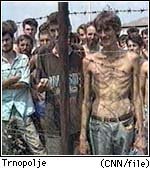
The man in the front weighing 48 kg is Fikret Alic, at the concentration camp in Trnopolje in 1992. If you read on the net about this famous picture that circled around the media world taken by a British newsteam, you will find a few articles where other people have accused the picture of being fake and that it was not a concentration camp. Fikret Alic now resides in Sweden, and happened to be my neighbours father in law, and I heard the story firsthand from him.

Why? How can it happen? How come human beings can be driven to such sudden extremes?

I am aiming to meet up with my colleague in Sarajevo, hopefully. She wasn't sure she could make it because they had recently found the bodies of yet more of her relatives, and there would be yet another mass funeral in her hometown. They had found the body of her uncle a few years ago and when her mother went to identify it they realised the head belonged to someone else...


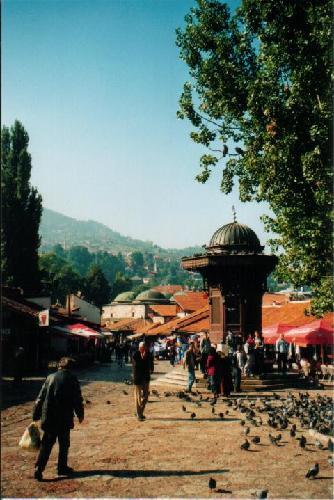
Old Town of Sarajevo

I'll be visiting my dearest friend, who together with her parents and sister have worked hard to try and rebuild the life that was suddenly taken away from them, yet with the harsh reality staring them in the face, that there are still landmines to be found, in the heart of Europe, around their summer house.

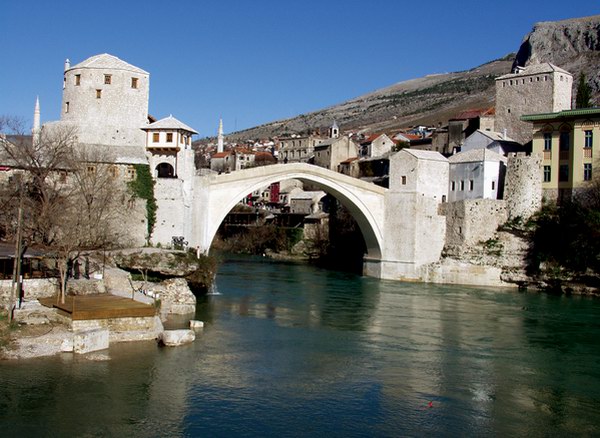
One thing I have learnt from the Bosnian people I have met throughout my life here in Sweden is that mankind is a master at recovery and life truly goes on. I hope to visit the historic Ottoman bridge in Mostar (built in 1566) that was rebuilt after it was bombed by Croat artillery in 1993, and I hope to visit the recently discovered so far 9 pyramids not far from Sarajevo. And above all, I hope to make sense of what happened to a whole nation, overnight, for I cannot forget the look in the eyes of my colleague when she talks about what happened to her. That blank, empty, "tears have run dry" stare left its mark on me and compelled me to make a visit to this forgotten land.


Mostar Bridge

May 25, 2006

God in Bosnia

One of my all time favourite songs, Marta's Song by Deep Forest, an old folk song in ancient Hungarian led me to look into the meaning of a word that was sung: Istenem, Istenem, and after seaching for its meaning I found that it meant My God/Lord.

I pondered on the word a while, for I recognized it from somewhere; Bosnia. I remembered hearing a Bosnian song and hearing a similar word mentioned in Bosnian.

Today over coffee, at the same café where I saw Tweezer Woman, I asked my Bosnian friend if she recognized the word istenem, and if it meant anything in her language.

Apparently the word for truth, is istina. I asked her if there was any word close to istina or istinem that in Bosnian meant God, just like it does in ancient Hungarian. She explained that the word for God in Bosnian (and Serbian) was bog (very similar to Russian & Ukrainian Боr and боr) , however in everyday slang God is referred to as Istina.

Apparently there is a Bosnian saying that goes:

Istina je samo jedna
tr: The truth is only "one"

Being a Muslim country as such, it must have incorporated the spirit of this meaning in everyday slang thus translating Truth into being synonimical to God. For just as there is only one truth, there is only one God.

Another interesting Holy Linguistics fact.